
Heat is the venerable enemy. Hope is what remains.
There Is Hope is a climate fiction mosaic novel about life on a planet devastated by climate change and the things that give people hope.
There Is Hope is the first story in the Museum of Life saga, from Earth’s last forest to humanity’s final archive among the stars. A print version of the novel is currently being prepared for release in 2026.
This page is the complete reading map for the serialized novel There Is Hope.
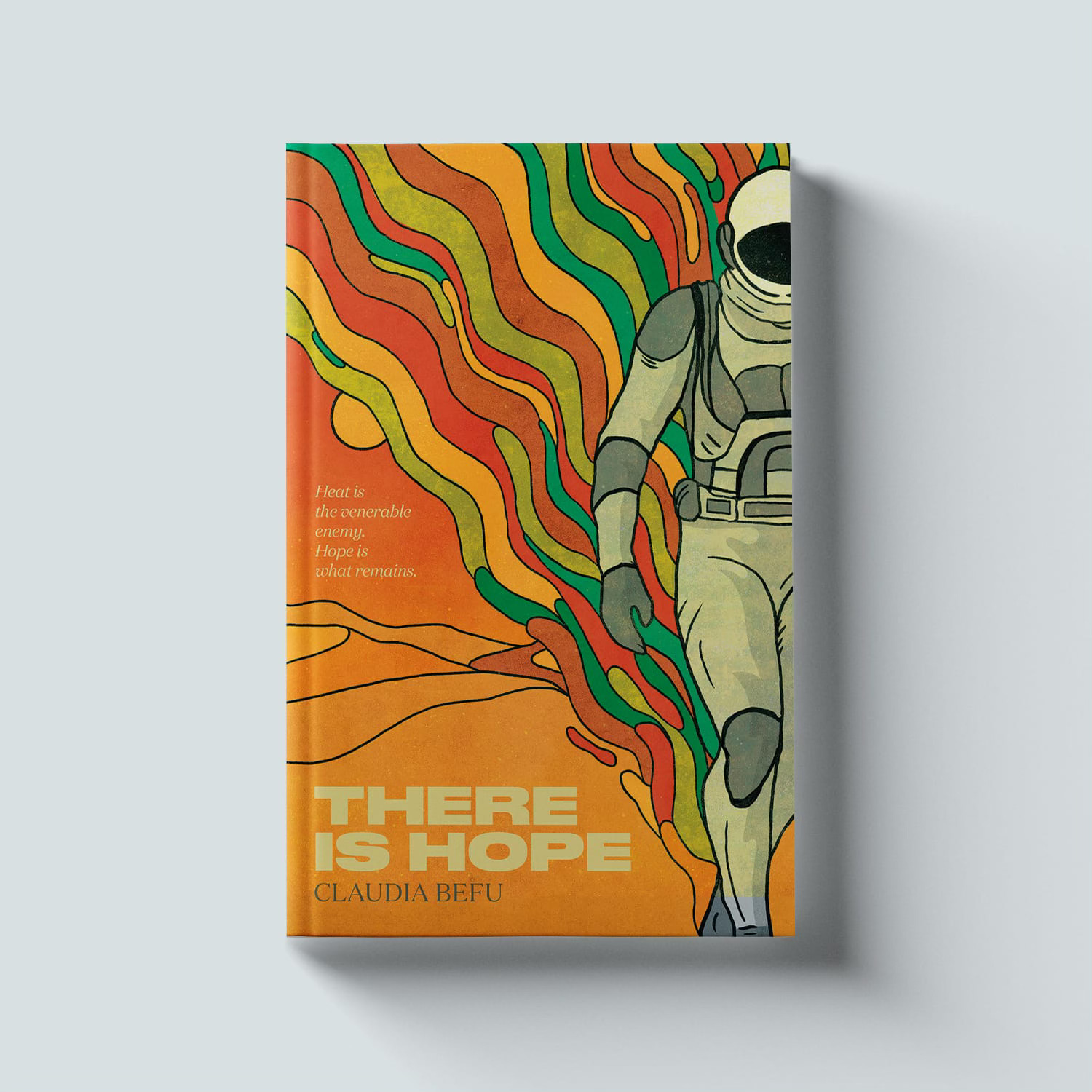
Book blurb
In every carbon cycle, death is the engine of life.
It is the year 2550. After four centuries of climate collapse, the fate of Europe’s last forest rests on a fractured continent. In the segregated north, the Cooperatives control all natural resources, claiming to restore Earth’s ecosystem. Their founders, former data moguls, believe only in their own survival. In the scorching south, the Dust Road—an underground trade route—is ruled by Dust Pirates. Some fear them, others believe they are Earth’s last hope.
Nova Novikov arrives on the Iberian coast to witness an annual human sacrifice and bring her daughter’s ashes to the ancient wooden shrine. But when a young girl is chosen for the ritual, Nova takes a decision that will ripple across centuries.
That young girl is Shia Santos, the founder of the Museum of Life, the first preserved human consciousness, and the maker of a new civilization.
Told as a mosaic of memories, There Is Hope is a luminous novel about ecological reckoning, sacrifice, and the fragile persistence of hope at the end of the world.
Prologue
The Deep Dive ⟐ æv.3660
/archive title: ‘there is hope’
curated by: museum of life ⬡
Welcome to There Is Hope, a fully immersive Museum of Life experience: a curated exhibition of recovered memory logs from the historical Dust Road.
It is the year 2550. After a four-century Data War, in which rival data moguls fought over the planet’s last natural resources, Europe lies ravaged by climate change and human greed, a post-apocalyptic wasteland.
The Northern Colonies Alliance clings to the cool north, segregated from the Dust Tribes—climate refugees surviving in the Dust Bowl of Central Europe, and from the Japanese Seaweed Colonies in the largely uninhabitable south. In the far east, the Siberian Cooperatives, stewards of the taiga—Earth’s last standing forest, hold the monopoly on all natural resources, desperately trying to preserve what remains of the planet’s fragile ecosystem. All are connected by the Dust Road, an underground trade route ruled by the elusive Dust Pirates.
This archive collection follows the extraordinary journey of Shia Santos, founder of the Museum of Life and the first, and only, maker to be transferred into our archive of preserved human minds, forever crossing in and out of existence.
We hope you’ll enjoy this curated collection of lives.
Your curators,
Deya & Sayuri Santos
Museum of Life ⬡
Series overview
If you’re ready, step into the Dust Road.
🔒 The completed series is now available for paid members. Please upgrade your subscription here.
Season 1: Human Island
While filming a documentary about a human sacrifice, a mother must come to terms with the untimely death of her daughter.
Season 2: The Seed Grower
An idealistic farmer grows illegal seeds of resistance but the arrival of an unlikely guest risks exposing everything and everyone she’s ever cared for.
Season 3: The Dust Pirates
A daring rescue during the Rainmaking Festival turns into a life-or-death journey, when a girl’s secret mission pulls a young boy onto a dangerous path.
Season 4: The Cooperatives
When a mysterious fungus threatens the last forest, an AI Officer—the Ghost—is sent to investigate. What begins as a routine mission soon takes a dangerous and unexpected turn.
Season 5: There Is Hope
As the last forest dies, a young girl encounters an unexpected glimmer of hope but saving it and herself will be almost impossible.
Auxiliary material
🔒 A deep dive into the worldbuilding of There Is Hope for paid members. Free articles are marked (F).
Field notes
The following non-fiction articles document the scientific, historical, and literary research that informed the world of There Is Hope.
All Field Notes are free to read (F).
The Great Dying and the Little Ice Age: Exploring forgotten chapters of climate history (F)
What if Vlad the Impaler ran the Ministry for the Future? (F)
Epilogue (excerpt)
Wrapped like mummies in seaweed cloth, we enter the belly of the beast: the concrete jungles of abandoned cities in the Dust Bowl of Central Europe. I hope these records remain as a testament to time, to our suffering. If we survive, I hope future generations learn from us and never repeat the mistakes of our ancestors.
The infernal heat is trapped in the concrete. Patches of melting asphalt mix with the cracked, rugged soil. Our shoes are old and worn, our feet painfully callused. We stagger through the heat like agonizing beasts, in a row, putting one foot in front of the other. Our overseers wear biosuits—a luxury we’ll never be able to afford. They’re not here to torture us or keep us from escaping. There’s nowhere to go. There’s no water. There’s no food on the Dust Road. We’re lucky to forage for human scraps. Our destroyers have left so much behind in these cities. They’ve been scavenged for centuries, and they still give. They are our livelihood and our lifeblood.
We crawl through hollow windows like empty eye sockets, through doorways without doors, like toothless mouths. We’re swallowed by the beast—up and down ruined stairways, breaking walls to extract the wiring. It’s hard work. The tools are heavy. Our bodies are dry, stringy. Dust clings to our clothes, scratching our eyes like sandpaper. Our fingers bleed from pulling the wires out of the walls, from dismantling the nests of our destroyers piece by piece. There are so many buildings—streets intersecting with each other, all caked in dust. We scavenge until sunset.
After work is the only time we drink and feed: saline dripping into our veins, a seaweed broth fortified with vitamins and minerals. At night, we unfold the thermal tents and rest. This is how we survive. This is what our work is worth. We are the walking dead. We are the zombie children. There is no escape. No future.
What readers say
“A tragically beautiful world so complete and immersive that it feels sensual even as it’s breaking your heart.”
— Ben Wakeman, Catch & Release
“Beautifully written and utterly believable, unfortunately.”
— Terry Freedman, Eclecticism
“My grief surrounding the deforestation and desertification of Iran—and the world—has surfaced through these pieces. What a beautiful planet we inhabit.”
— Keyon Hejazi
“Excellent! The writing feels careful and intentional.”
— Peter Clayborne, Anarchy Unfolds
“The Ghost is becoming one of my favorite characters on Substack.”
— Brian Wilcox, Standing in Doorways
Thank you for reading,
—Claudia Befu