

Technology should reintegrate humans into planetary life, not abstract us from it.
🜃
One thing climate change has made clear to us is that humans haven’t mastered nature yet. Perhaps we never will. And that is fine.
The idea of mastering nature comes from a feeling of fear, a survival instinct that any living creature on this planet—no matter how small and insignificant—possesses. However, human civilization has come to a point where it allows us to stop operating from that place of fear in our relationship with nature. But our social neurosis doesn’t allow us to see clearly.
When we operate from a desire to dominate all the non-human forces that have agency on this planet—be it a predatory species or the cycles of natural ecosystems—we see everything as a threat. The very place that gives us life becomes the perceived enemy. And so, we retreat in an abstract world of our own making, our minds tethered to life-simulating devices.
Historically, human creations have helped us survive, explore, and understand the world more deeply. Our art, music, writing, philosophy, and science have elevated the human condition by keenly observing our surrounding world and taking inspiration from it. Modern technology can enhance our senses, bring us closer to the natural world, without the need to resort to violence to feel protected. Without the need to cut ourselves from forests to feel sheltered. Without the need to poison our waters to feel clean. Without the need to exploit this planet and other living beings to feel like we are making progress.
Imagine technology that lets us listen to a tree.
Feel the heartbeat of a cheetah.
Hear the colors of the rainbow.
Sense the tremors of the next earthquake.
Technology should immerse us in the world, not extract us from it.
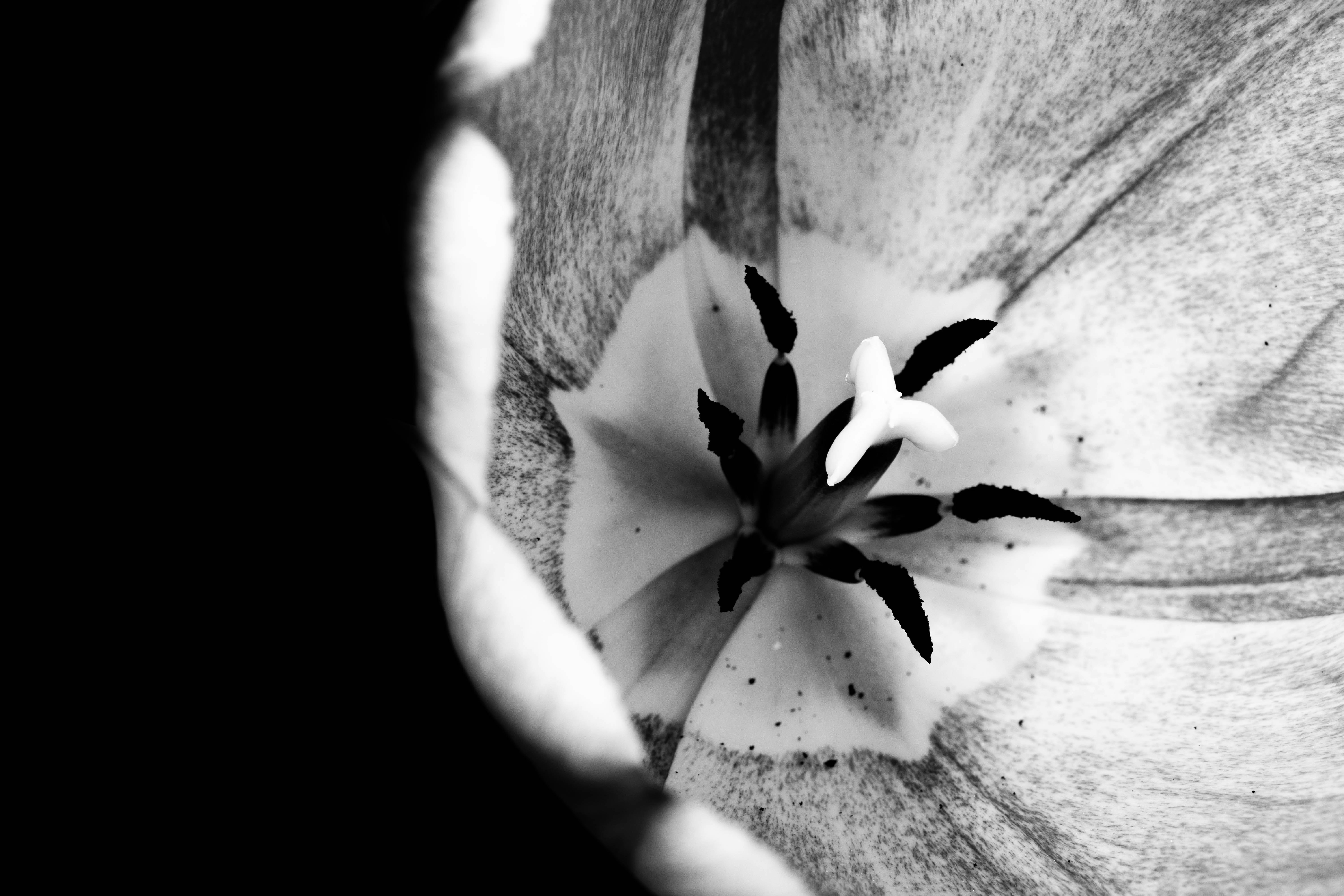
🜃
Cognitive Ecology is a philosophical notebook being written in public and collected in print at the end of 2026. You’re reading it as it takes shape. Start from the beginning here.
Thank you for reading,
—Claudia Befu
I think humans can't be subtracted. This is because we dream, and we can't absolutely control it. Our ability to live with so much uncertainty is something that AI, in its pursuit of perfection, won't be able to manage alone. Understanding the passage of time gives rise to hallucinations, and AI won't be able to manage that alone.
When I read articles suggesting that 70% of the white-collar jobs will be replace by AI within the next 18 months, I don't feel warm and fuzzy. I see an eroding of the human's necessity occurring at an accelerating pace.
I am not a "glass half empty" sort of person but I do like to connect the dots and as someone who was born around the time that JFK gave his signature speech at Rice University, I've got to witness things.
One notable occurrence is the fact that within my lifetime I will see humans travel to the moon in unique segments. During the first segment, a show called Star Trek inspired several generation to imagine "what could be". Now, during the second segment, an embarrassment named Starfleet Academy has surfaced on the scene. Proving to me that the depth of creative spirit, imagined by the human psyche, and portrayed by cinematic influencers has dwindled, significantly.
As someone who thinks that Immanuel Velikovsky was, more right than wrong, when he wrote "Worlds in Collision", I find that as a species, we have always had dependence in one form or another. Catastrophe after catastrophe saw the species nearly eliminated again and again, only to see it claw it's way back. This time might be different. Our dependence has altered significantly as an electrified world has shifted from reliance on ones'-self for survival to a culture buttressed by technology.
Am I concerned for myself? No. My time on this planet is quickly passing. Am I concerned for my children? Somewhat, but technology has not deemed them irrelevant, yet. Am I concerned for the species? No. The desire to marginalize humanity is a self-inflicted wound.
I have been fortunate enough to have lived through the best of what humans can achieve, in my youth and now, I believe I am witnessing the mirror opposite in the twilight of my years.
Someone should write a book.