

The world as we know it is a reflection of the mental bubbles in which we live.
What distinguishes the human species from other animals on this planet is our capacity for reflective thought. We think, therefore we are. We think, therefore our reality exists.
If we seek a better future on this planet, we must start by examining the belief systems at the core of our society—what led us here, what still serves us, and what no longer does.
Changing our beliefs, values, and human aspirations will not be the work of a single person or a single generation. It will be a cathedral of thought, built by countless people over hundreds of years. Along the way, each of us must add a stone. Each stone is a lifetime of observing the world and reflecting on a better future. Each stone is one voice. A future sung by countless voices.
🜃
You are the smallest unit of resistance: a unique worldview that encapsulates the entire universe. A clear mind can poke a hole in the fabric of our collective reality and glimpse at possible futures.
One summer morning when I was six years old I was walking with my mother when I suddenly asked her: Why do we live in these buildings? As if hit with a zen koan, my mother looked at the cheap, grey communist buildings in our working class neighborhood. Sensing her confusion, I added: Why don’t we live in trees? To which she laughed, somewhat relieved, and continued walking. I was too young to explain my vision with words but I had a vivid image in my mind: a forest city with white oval pod homes anchored to the trunks of giant trees.
To this day, I don’t know where that image came from. Our diet of communist TV didn’t include science fiction. The dictatorship was our utopian future.
Three years later, the Iron Curtain fell. My mother died of brain cancer soon after, never seeing the freedom she had hoped for. In the years that followed, as I navigated personal grief, I watched our society’s tumultuous transition from dictatorship to democracy. In 2001, I moved to Western Europe, where I experienced firsthand the capitalist aspirations of my country. This time, I laughed too but with tears in my eyes.
I never forgot the forest city, but the more I learned about the world, the more impossible it seemed. We are drifting further and further away from a liveable future. But in 2013, I had a story idea set in that imagined forest city.
Twelve years later, that idea has grown into a sprawling secondary world spanning over fifteen centuries from 2100 CE to 3600 CE. Imagine a vast archive of human memory logs, curated and woven into story collections, experienced through an immersive virtual exhibition—that is my Museum of Life universe, my own cathedral of thought.
Future generations will not be insulated from the world we destroyed for them. They will inherit digital memories of everything this Earth once was and is forever lost to them. Forever grieving for a world they will never know.
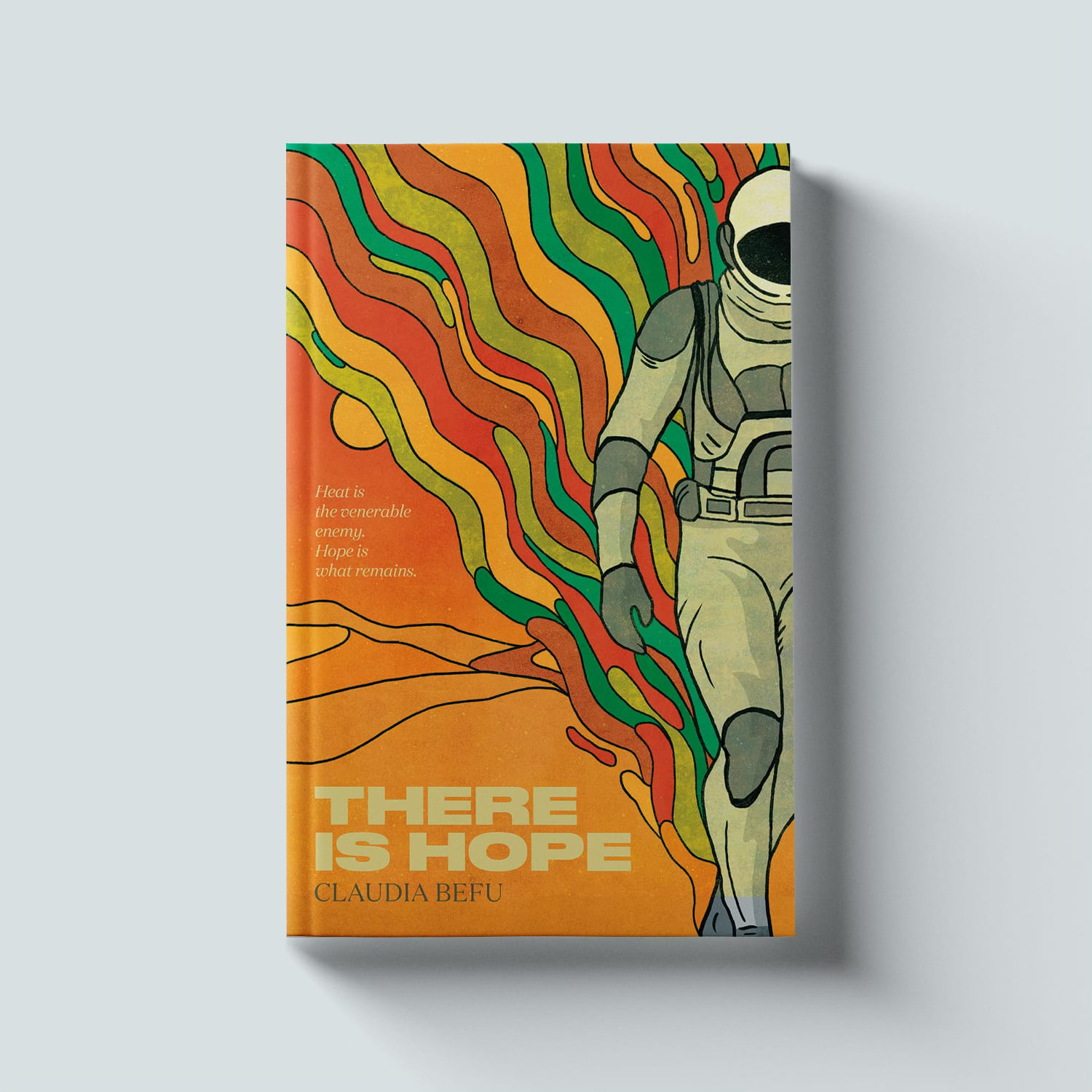
In 2025, I finished serializing my climate fiction mosaic novel, There Is Hope, and the first book set in this universe. There Is Hope is a story about life on a planet devastated by climate change and the things that give people hope. The interwoven stories are a collection of memory logs from the Dust Road, curated by the Museum of Life—an archive of preserved human minds, forever crossing in and out of existence. The novel is currently in the process of being published as a print book. I’ll keep you updated on the progress. The serialized version remains available here.
There are many excellent scientists, journalists, and data scientists laying out the facts about the current state of affairs in our world. We now have access to an overwhelming amount of information. What remains difficult is synthesis, bringing the information at a human, individual level. As Homo sapiens, we must use our capacity of thinking to learn, reflect, form opinions, and express them in our own ways.
I am fascinated by systems, blueprints, and patterns. As a former poet, I appreciate economy of language, metaphor, and brevity of thought. Expressing ideas as poetic, philosophical aphorisms comes naturally to me. Once I recognized this, I decided to lean into it.
You can now read my growing collection of daily aphorisms reflecting on society, technology, nature, and the future of life on this planet. Each week, I take one aphorism and expand it into a longer philosophical reflection. These reflections live alongside my fiction, each another mosaic piece in the fresco of my work.
At the end of the year, a selection of these aphorisms will be gathered into a limited-edition print booklet titled Cognitive Sovereignty.
🜃
You are born once and you die once. Your singular existence never happens twice. Your senses will experience life once, the heart beating in your chest will love and hurt in one lifetime only, your beautiful brain will contemplate the universe and the meaning of life only this one time. For you, everything is new under the sun.
My parents—educated people who refused to join the communist party—worked three-shift factory jobs. I remember my mother hauling bags of recycled glass bottles back to the store, queuing at 5AM for milk and kefir, chasing down delivery trucks for a bag of chicken wings and feet, and doctoring our ration card to buy an extra loaf of bread.
That world vanished almost overnight. But it taught me an early lesson: how we live, what we believe and how we imagine the future are shaped by ideologies designed by others.
My writing is an exploration of a world that could have been—for myself and for my mother.
Thank you for reading,
—Claudia
The book cover is EPIC!
Too often I find book covers have fallen into a kind of boring homogenisation where nothing really stands out. This, though, is utterly brilliant.
So is it available to purchase?
Thank you for sharing your story here, too. 🙏
I saw the cover and immediately thought "I know who did that art". It's gorgeous! And sounds right up my alley as well. I look forward to reading it.